
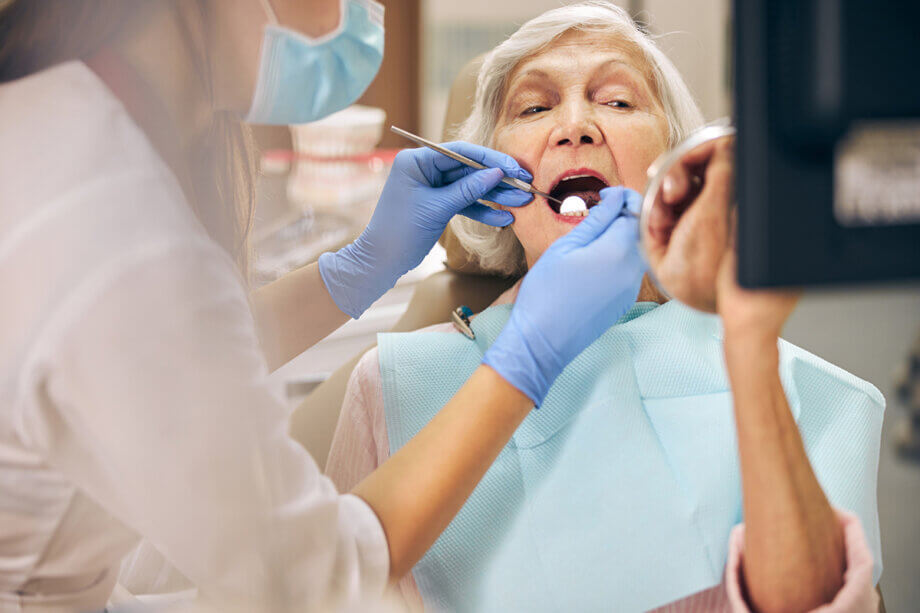
Age-related oral health problems can sometimes lead to missing or damaged teeth. Many older adults ask us whether they are too old to complete their smiles with dental implants. Fortunately, there are no upper age limits for dental implant restorations. Certain limiting factors, such as overall wellness, may affect your ability to receive implants on a case-by-case basis.
This article explains how dental implants work and why they are an excellent choice for improving your appearance, oral health, and quality of life compared with other restorative options typically offered to older adults.
How Dental Implants Work
Dental implants are unique because they replace both the root and crown of a missing tooth. We provide single-tooth implants as well as implant-supported bridges and dentures. These appliances are supported by small titanium anchors surgically placed in the jawbone. We secure a dental crown, bridge, or denture to the anchor to replace the visible part of your tooth. After healing, you will enjoy having a complete, healthy smile.
Why Dental Implants Are the Gold Standard for Tooth Replacement
More Secure Fit Than Full or Partial Dentures
An implant-supported restoration sits securely and will not slip or click. Once you become accustomed to your restoration, you will not have speech issues that can sometimes accompany denture wear. You’ll be able to smile, laugh, and eat confidently at home and on the go.
Better Oral Health Outcomes
Bridges and dentures often trap food, plaque, and debris, increasing your chance of developing decay in natural teeth and compromising gum health. Cleaning around these appliances can be a challenge, especially for patients with reduced mobility. Patients with dental implants can keep their mouths cleaner with far less hassle and, as a result, improve their oral health.
Maintain Jawbone Strength
In addition to lowering your chance of developing tooth decay and gum disease, dental implants keep your jawbone healthy and strong. Natural or artificial tooth roots provide the chewing stimulation that your jawbone needs to maintain its volume. Lost jawbone volume can lead to facial sagging.
Factors That May Limit Your Eligibility for Dental Implants
Overall Health
Patients who want dental implants need to be healthy enough for an elective surgical procedure. Some chronic health conditions, like cancer and uncontrolled diabetes, may preclude you from receiving implants. We will share other options, such as traditional bridges and dentures.
Lowered Jawbone Volume
When we evaluate your candidacy for dental implants, we take digital scans of your jawbone. If we notice your jaw is missing volume due to a missing tooth, you may be able to undergo a preparatory procedure known as a dental bone graft. A bone graft helps your body create new, healthy tissue using donated or artificial material like a scaffold.
Other Anatomical Factors
Rarely, patients may not have sufficient space in their upper jaw to accommodate an implant anchor without compromising the sinus cavity. In this case, we can refer you for a procedure called a sinus lift that creates more usable space.
Untreated Gum Disease or Tooth Decay
Before beginning the implant process, we must address any untreated oral health issues, such as tooth decay and gum disease. If you have active tooth decay or periodontal problems, you may have an increased risk of implant failure.
Smoking or Tobacco Use
If you smoke and want dental implants, the best plan is to quit. Tobacco use of any kind impedes blood flow and slows the healing process, leading to possible complications.
Don’t Rule Out Dental Implants to Restore Your Smile
Today, we welcome many older adults to our practice who are interested in dental implants. If you’ve wanted implants for years and now have the opportunity, we can help you restore your natural smile. We will gladly answer your questions and evaluate your candidacy when you visit our office for a consultation.
Frequently Asked Questions About Dental Implants
What is the success rate for dental implants?
The success rate is about 95 percent when patients maintain excellent oral health. Complications like peri-implantitis, a condition related to gum disease that can result in implant loss, can occur if you skimp on oral hygiene.
Does my risk of dental implant failure increase with age?
Your statistical risk increases as you age, but if you take care to address bone volume, gum health, and tobacco use, you will experience a better outcome. Please let us know if you have any concerns about your risk factors.
How long does it take for a bone graft to heal before I can receive dental implants?
A bone graft takes about 6-9 months to heal to the point where we can proceed with a dental implant. You must be healthy enough to undergo minor dental surgery to receive a bone graft. The procedure itself is simple and, in most cases, well-tolerated.
Can I replace just one tooth or an entire arch using dental implants?
We offer several implant types, from single-tooth to full-arch dentures. We will evaluate the health of each tooth to help you decide what kind of implant you need. Our full-arch implant-supported dentures are significantly more comfortable than standard dentures because they do not cover the roof of your mouth.
How long do dental implants last?
Dental implant anchors can last a lifetime with proper care and healthy bone volume. The crown that completes the restoration may need to be replaced every 10 to 15 years due to normal wear. The better you treat your implants and care for your remaining natural teeth, the longer you can expect them to last.
At Metrowest Prosthodontics, we can help you achieve a healthy smile no matter your age. We use advanced techniques to ensure your dental implants have the best chance of success. Please get in touch with us today with questions or to book your consultation!