When it comes to replacing missing teeth, you have some options. The two main treatments include bridges and dental implants. These are the most common and often preferred prosthetics in dentistry.
Replacing missing teeth is in the best interest of your oral health as well as your quality of life. Dental prosthetics restore your smile and chewing capabilities while keeping your teeth in proper alignment.
When it comes to choosing the best treatment option for you, some factors to consider are cost, durability, and long-term value. In this article we will compare dental implants and bridges in all of these categories to help you make a fully informed decision about your care.
How Dental Bridges Replace Missing Teeth
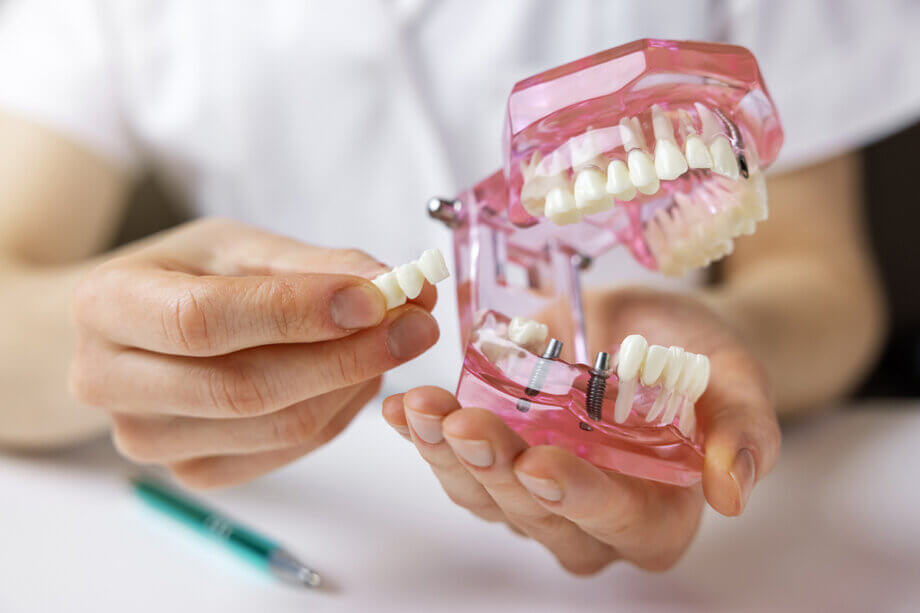
A dental bridge is a row of artificial teeth (typically 2-4) connected at the center with a crown on one or both ends. The crowns fit over the healthy teeth on either side of the gap, providing support for the pontic, the artificial tooth that replaces the missing one. The pontic sits on top of the gums, restoring chewing capabilities and completing your smile.
Bridges are a quick, minimally invasive, and affordable option for replacing 1-4 missing teeth in a row.
What is a Dental Implant?
A dental implant is an artificial tooth root made of titanium that is surgically placed in the jaw. It replaces the natural root by fusing with the bone to form a solid anchor for a prosthetic. When it comes to replacing a single tooth, one implant can support a crown. For the replacement of more than one tooth, multiple implants can be placed in the jaw to support a bridge or dentures.
Dental implants offer stability, longevity, and jaw bone preservation. They can replace anywhere from one to all of your teeth.
Comparing the Long-Term Benefits of Dental Implants and Bridges
The dental implant process may take longer initially, but once they are fully integrated with the jawbone, they can last a lifetime. Dental implants stimulate the bone the same way your natural tooth roots do, keeping the jaw strong and preventing bone loss. They are extremely stable and provide a natural appearance.
Bridges can last anywhere from 5-15 years, but with good care and maintenance they may last 20 years or more. They don’t usually last as long as dental implants due to the strain they place on the support teeth. Another long-term disadvantage is that bone loss will occur over time because a bridge sits above the gumline.
Cost Differences Between Bridges and Implants
Bridges cost less upfront than dental implants. This is due to the less complex placement process and fewer materials. For patients whose primary concern is cost, a dental bridge may be the best option for you. However, bridges typically require replacement sooner than implants, and potential damage to the support teeth may result in the need for alternative treatment options. Insurance is more likely to cover bridges than dental implants due to the lower upfront cost.
Dental implants cost more initially, but they are a long-term investment in your oral health. Implants that fully fuse with the jawbone can last a lifetime, providing long-term support for dental prosthetics. The prosthetic portion (crown or dentures) may need to be replaced over time, but the implants themselves typically remain in place. Insurance does not always cover dental implants, but the cost can be financed for greater affordability.
Which Option Is Better for Your Lifestyle and Oral Health?
Lifestyle factors are an important consideration when it comes to choosing a tooth replacement option. Oral hygiene is a factor, as cleaning around dental work is important to prevent tooth decay and gum disease. Single dental implants can be brushed and flossed just like your natural teeth, but it is necessary to clean under bridges and dentures.
Smokers or chewing tobacco users are often not ideal candidates for dental implants. Tobacco reduces circulation to the underlying tissues, making the healing process slower and may prevent an implant from adequately fusing with the bone.
A professional evaluation can provide additional insight into the best treatment for your needs and goals. A personalized treatment plan should be created by a dentist or prosthodontist to ensure that you are getting the right care.
Restoring Your Smile With Confidence
Bridges and implants both replace missing teeth to restore your smile and dental function. While the dental bridge process is shorter and costs less, dental implants provide a longer lasting restoration. If you’re ready to get a professional recommendation, contact us at Metrowest Prosthodontics to schedule a consultation.
Frequently Asked Questions About Tooth Replacement Options
How long do dental bridges usually last?
A bridge can last an average of 5-15 years, but may last longer with good care and maintenance. The quality of the materials is a key factor in longevity.
Are dental implants painful to get?
Dental implants are placed using local anesthesia in most cases to make the procedure comfortable. If you’re feeling anxious, ask your dentist about sedation options.
Which option looks more natural, bridges or implants?
Dental implants typically offer a more natural appearance than dental bridges because they are anchored in the jaw like your natural teeth.
Can anyone get dental implants?
Not everyone is immediately eligible for dental implants. Patients with bone loss due to missing teeth may need some preparation before getting implants, such as bone grafting.
Do dental implants require special cleaning?
Dental implants should be cared for similarly to natural teeth with regular brushing, flossing, and professional cleanings. Maintaining healthy gums is important for protecting the long-term success of the implant.
At Metrowest Prosthodontics, we are dedicated to helping patients restore healthy, confident smiles through advanced prosthodontic care and personalized treatment planning. Our team takes pride in providing long-lasting restorative solutions designed to improve comfort, function, and appearance. We work closely with every patient to create treatment plans that support lasting oral health and quality of life. Contact us today to schedule a consultation.